

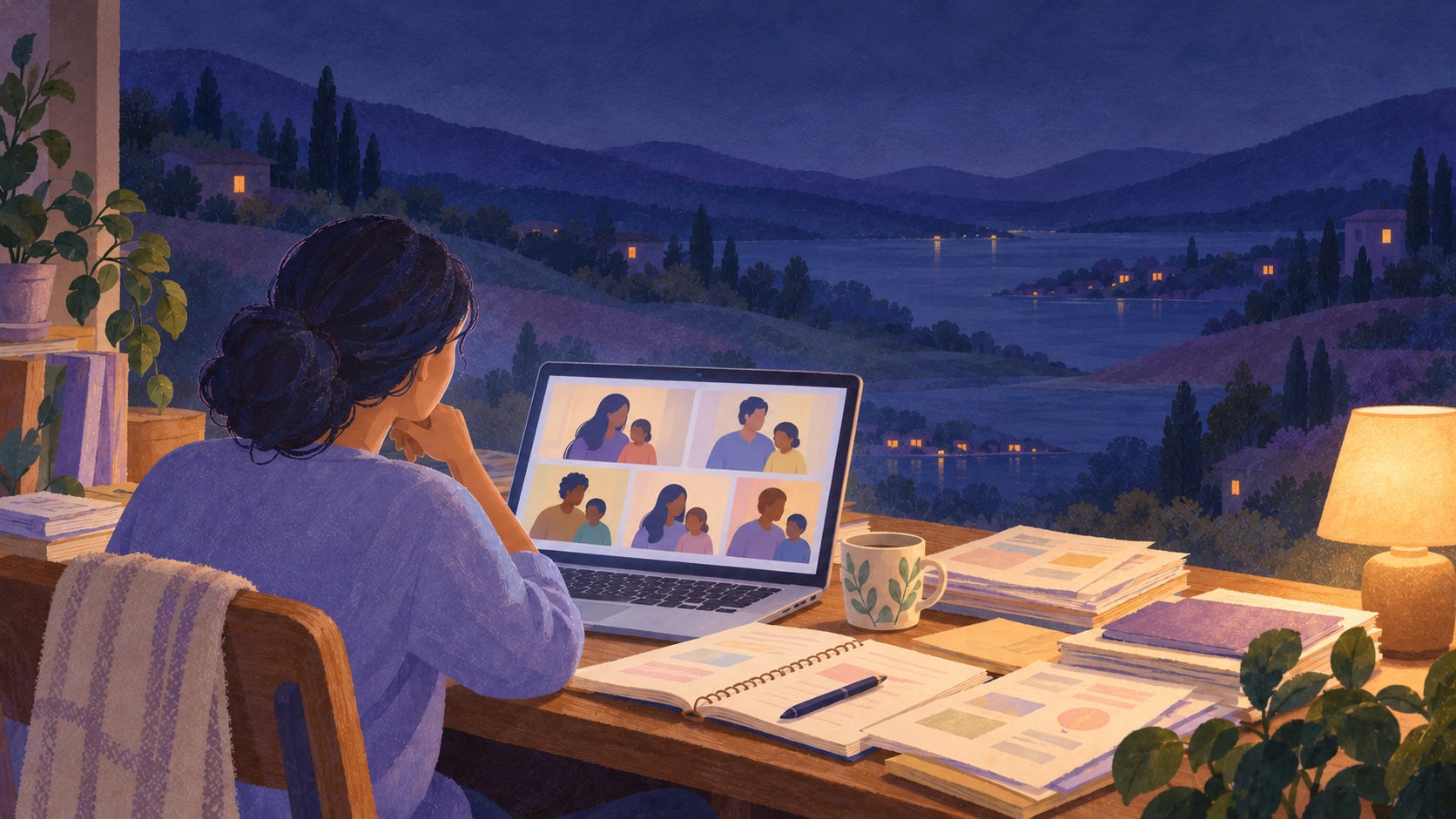
I recently chatted with one of my rare mom friends, an incredible rockstar advocate. She is the kind of rare disease advocate who built a full 501(c)(3) patient organization, because nothing had existed when she needed it most. When her child was diagnosed with an incredibly ultra-rare disease, there was no patient group anywhere in the world, and almost no research being done on her child’s condition. No one was waiting to support her, so she became that person herself, giving her heart and her energy to every other family in that small world.
She built the first organization in the world for her child’s disease, and it is still the only one. All she had to go on at the start was a prognosis of less than 10 years for her child, and a version of a sentence too many of us have heard: “just take them home and love them.” It gets handed to parents far too often in life-limiting childhood rare diseases, as if there were nothing else anyone could do. I heard my own version of those words once, and they are where my first article began.
She built it from nothing
Like me, she did not accept that there was nothing else to do. She became what so many of us become, “a mom on a mission.” She gave hours she did not have to build an organization where none existed. She raised money. She found researchers and clinicians who had never heard of her child’s disease. And she did all of it while caring for her family, holding her marriage together, and working a full-time job, because even good insurance did not cover what her family needed.
I want to be honest about what that costs, because it is the part of advocacy no one says out loud. The work does not wait for you to be ready, and it does not pause while you grieve the future you imagined for your child. Underneath all of it sits the hardest truth of all. When you build research for an ultra-rare disease, you do it knowing it may not arrive in time for your own child. You pour years into a future you may not get to share, so that the next family might. Having been in this community for many years, I have watched parent after parent make that choice with full knowledge of the odds.
The science finally showed up
For years, the hardest thing my friend carried was that there was nothing. She built a small board of directors made up of other dedicated parents. But there was still no treatment. No trials. Nothing moving in her families’ direction. She kept building anyway, on faith that one day it would matter.
It took years, but that finally changed. There are clinical trials now for this community. After everything, the thing everyone had prayed for actually showed up! You would think that is the happy ending, the part where she finally gets to exhale.
The part no one warns you about
She is not exhaling. She is exhausted and anxious, because her community is so small and so scattered across the world that she cannot get the word to everyone in time. When your entire community might be a few hundred families spread across dozens of countries, there is no simple way to reach them, and the clock is not on your side. Part of her fear is quieter and harder to say out loud: that they may not find enough children for the trials to even go forward, because a study this small can stall when too few families ever learn it exists.
And it is not only the families who need to know. Most of the doctors caring for these children have never seen this disease and never will again, so they have no reason to watch for an opportunity that did not exist a few years ago. The knowledge that could change a child’s life sits just out of reach of the very people who would use it. No one is failing them. There simply are not enough hands to carry the news in the last stretch.
I know this ache
I know this particular ache. I once tried to make the world pay attention to Gaucher disease type 2/3, mostly on my own, and it is its own kind of lonely. The cruelest part is the timing, because it gets harder right when hope arrives. For years the grief is that nothing is coming. Then something comes, and the grief becomes that it might come for everyone except the families who cannot find out in time.
The finish line that is really a starting line
We talk about research as if it were the finish line. A trial opens, a paper publishes, and we celebrate, as we should. But for the smallest communities, the trial is not the finish line. It is the start of a frightening race to make sure their families are not the ones who never heard the door open.
The communities that most need help being found are the ones with the fewest people to find them. That is the quiet unfairness inside rare disease I cannot stop thinking about. My friend is still up at night, trying to reach families she has never met, in countries she may never see, before time runs out for their children. She should not have to do it alone.
First published on LinkedIn, June 16, 2026.
These views are my own, written as a rare disease parent and advocate, and do not represent any employer or organization I work with.
Beautifully written! You give voice to a major concern of every parent of a child with a rare disease and every rare disease patient advocacy or research organization.