

People assume that when a child is given a rare, life-limiting diagnosis, the family shows up. Grandparents help, relatives step in, and at least the parents have that. It isn’t always true.
When our daughter Hannah was sick, Robert’s family was a godsend. But I also know what it feels like when the people you always expected to be there aren’t. I’ve seen that same contrast in many families over the past 15+ years.
It is hard to say that your own family isn’t helping or isn’t there for you. For many, it’s embarrassing, one more stress on top of an already overwhelming life. For others, it’s hurt, disappointment, or simply no energy left to explain one more devastating thing. Saying “we’re fine” is easier than having that conversation again.
But that silence leaves everyone else assuming support is in place. Friends hold back because they think family has it covered. The healthcare team may ask “Do you have family nearby?” without asking whether those relatives actually help. A yes to one question doesn’t answer the other.
The support we received wasn’t complicated, but it made our life so much easier. Family took Ethan and Abby out for an afternoon, or for an overnight with their young cousins. They brought dinner or groceries. Robert’s family often sat in our living room chair and held Hannah while she slept, so we could focus on something else knowing she was safe and loved.
Think about the caregiver you know. Really think about them. Do you know who is actually helping them? Ask them, privately, “Are you getting the help you need?” Or offer something specific: “Could I bring dinner on Tuesday?” or “Can I take the siblings for ice cream and the park?” Rare families don’t want to be an inconvenience, and what you offer is often something they’ve been putting off because it never made it to the top of the list.
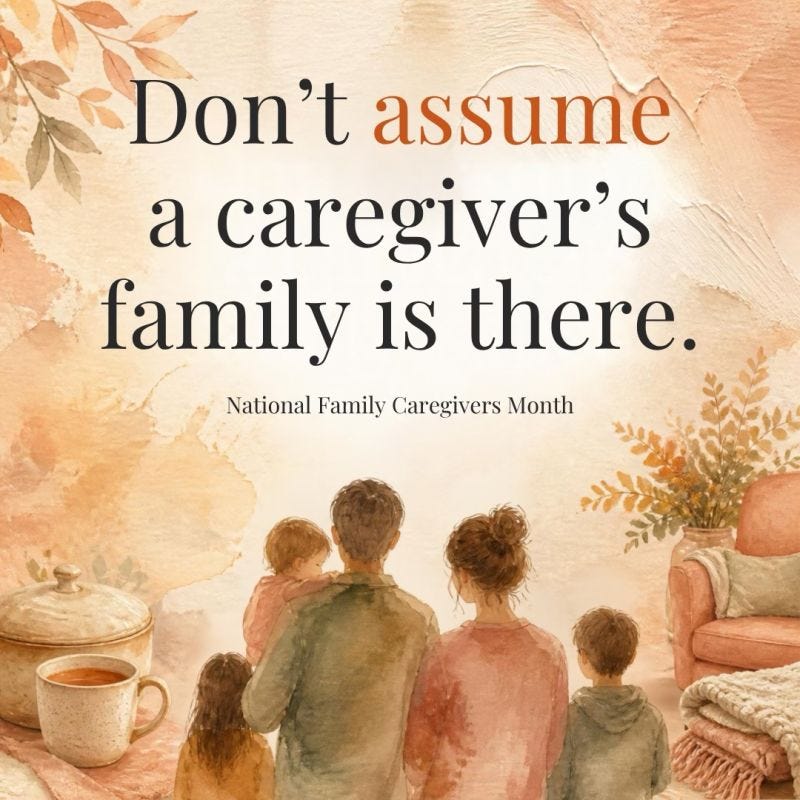
November is National Family Caregivers Month. Please don’t assume a caregiver’s family is there. Please don’t assume they have the support they need to keep their children safe and their sanity (relatively) in check. And if you are the caregiver whose own family isn’t, you are not the only one.
First published on LinkedIn, November 17, 2026.
These views are my own, written as a rare disease parent and advocate, and do not represent any employer or organization I work with.